
This volume continues Dan Hagedorn’s effort to highlight overlooked U.S. service aircraft of World War II whose contributions have often been minimized or ignored. Earlier works examined the Douglas B-18 and B-23, the Curtiss-Wright AT-9 Jeep, and the North American O-47. Reader response confirmed widespread interest in these neglected aircraft and the crews who flew them, especially among those weary of repeated accounts centered solely on famous fighters and bombers such as the P-51 Mustang.
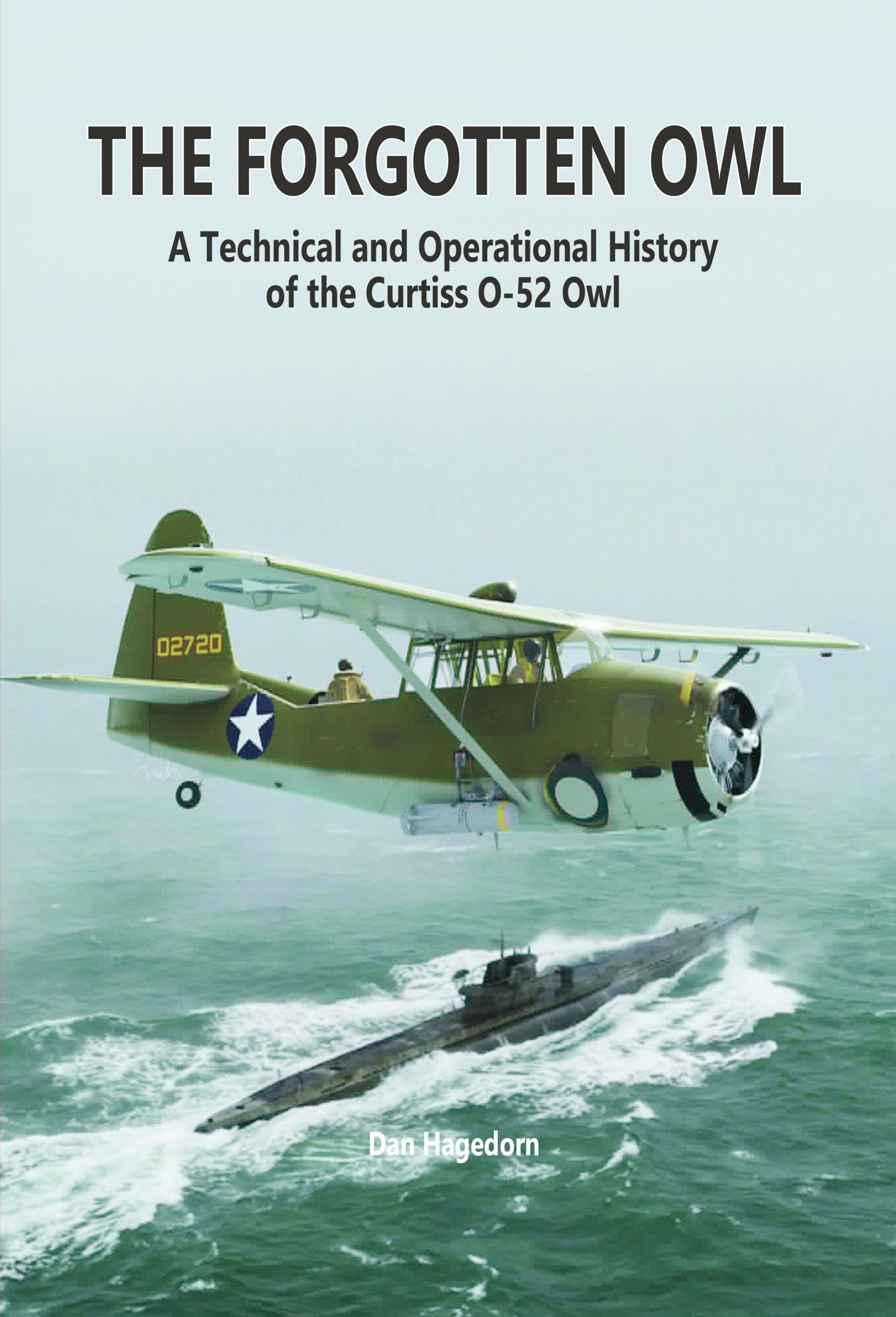
This book focuses on the Curtiss O-52, not on what it failed to achieve, but on the valuable roles it actually performed. Although often dismissed by critics as obsolete before it entered service, the O-52 represented a modern observation aircraft when fielded in 1941. Its development occurred during a period dominated by more dramatic wartime events, leaving the aircraft largely unnoticed. Curtiss referred to it as the “Owl,” while the nickname “Flying Greenhouse” appeared only rarely in contemporary sources.
The O-52 entered service during a major shift in U.S. Army Air Corps doctrine. Combat reports from Europe suggested that slow, lightly armed observation aircraft were vulnerable in modern warfare. Senior officers argued for eliminating single-engine observation planes from daylight operations, citing the O-52 specifically. Strategic air power advocates used these assessments to challenge traditional Army observation aviation.
Yet wartime necessity transformed rather than eliminated the observation mission. O-52s and similar aircraft adapted to coastal patrol, reconnaissance, liaison, and tactical support roles for which they had not originally been intended. Observation aviation itself survived under new labels such as tactical reconnaissance and forward air control.
The author argues that history repeatedly reaffirmed the military need for responsive aerial observation, from World War II through Korea and Vietnam. Aircraft carrying “O” designations continued to appear for decades, proving that observation aviation never truly disappeared. The O-52 therefore deserves recognition as part of this long and evolving tradition.